
China Suspends October Fuel Exports as Domestic Stocks Fall, Raising Fears of Higher Global Petrol and Diesel Prices
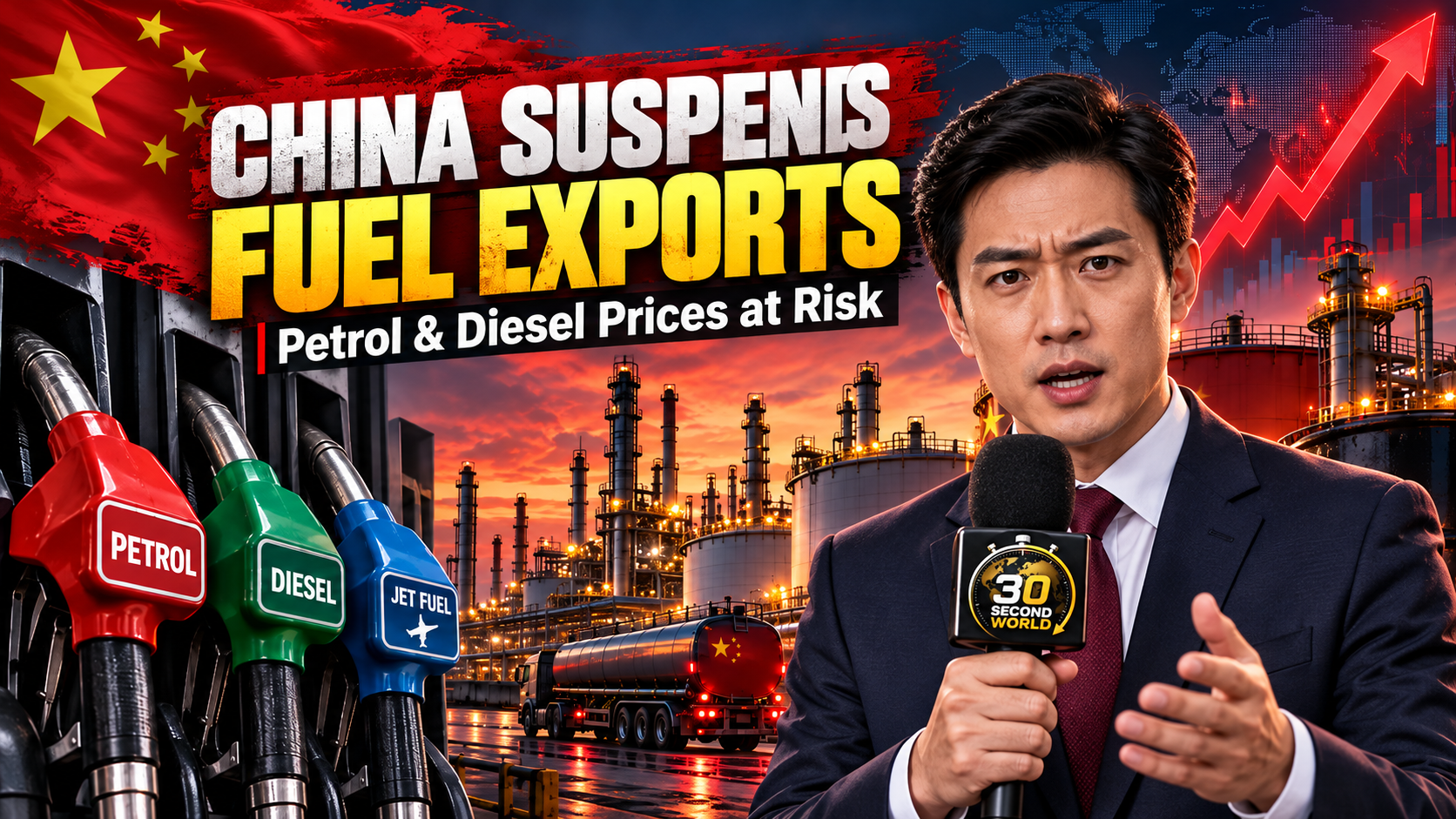
SINGAPORE/BEIJING, Oct. 2, 2026 — Chinese refiners have suspended exports of gasoline, diesel and jet fuel for October to most overseas markets as Beijing prioritizes rebuilding domestic fuel inventories, a move that could add further pressure to already tight global energy markets.
Reuters reported that four people briefed on the matter said Chinese refiners had not received approval to export refined fuels in October to destinations outside Hong Kong and Macau. PetroChina has also cancelled several gasoline and jet-fuel cargoes that had been scheduled for this month. Reuters
China’s National Development and Reform Commission did not immediately respond to Reuters’ request for comment during the country’s public holiday, so the suspension should be described as a source-reported policy move rather than a formally published nationwide ban. Reuters

Why Has China Suspended Fuel Exports?
The main reason appears to be domestic energy security.
China is trying to rebuild local inventories after months of disruption in global crude and refined-product markets. Trade sources told Reuters that Beijing has made future exports dependent on domestic stocks returning closer to pre-war levels. Reuters
According to Kpler analysis cited by Reuters, Chinese commercial stocks were roughly:
- 20 million barrels below target for diesel and gasoil
- 9 million barrels below target for gasoline
That shortage helps explain why Beijing is prioritizing the domestic market instead of allowing refiners to take advantage of strong overseas margins. Reuters
Which Fuels Are Affected?
The suspension affects major refined petroleum products including:
- gasoline
- diesel/gasoil
- jet fuel
PetroChina reportedly cancelled several October cargoes, while Zhejiang Petrochemical did not schedule product exports during China’s holiday week. Reuters
It remains unclear whether Beijing will allow exports to restart after the Golden Week holiday ends on October 7.
That decision could depend on domestic inventory levels and refinery output. Reuters
Is China Banning Fuel Exports Permanently?
No evidence currently suggests a permanent ban.
Reuters reported that China has been managing refined-fuel exports on a month-by-month basis since supply disruptions intensified earlier this year. Reuters
China restricted fuel exports in March after the Iran war disrupted Middle Eastern crude flows, then eased those curbs in July.
So the current move appears to be an attempt to protect domestic supply rather than a permanent withdrawal from international markets.
Why Does This Matter for the Global Fuel Market?
The timing is important.
Global diesel and other refined-fuel markets are already under pressure because of:
- the Iran war
- disruptions to Middle Eastern refinery and shipping infrastructure
- Ukrainian attacks on Russian refineries
- Russia’s diesel export restrictions
- low inventories in several major markets
China is not the world’s largest exporter of refined products, but removing Chinese barrels from the market still tightens supply further. Reuters
Capital Economics economist Hamad Hussain told Reuters that China’s restrictions are smaller in impact than the loss of Russian and Middle Eastern exports, but still represent another source of stress in an already tight market. Reuters
Oil Prices Jump After China Export Report
The market reacted quickly.
Brent crude settled at approximately $102.31 per barrel, up more than 4%, while U.S. West Texas Intermediate ended near $92.87 after reports of China’s fuel-export suspension combined with renewed concerns over Middle East tensions. Reuters
That does not mean China alone caused the price jump.
Oil prices were also influenced by reports of additional U.S. military deployments to the Middle East and continuing uncertainty around Iran.
But the Chinese export suspension added another layer of supply concern.
Could Petrol and Diesel Prices Rise?
Potentially, yes.
When fewer refined products are available internationally, buyers may have to compete for alternative supplies.
That can put upward pressure on:
- wholesale diesel prices
- gasoline prices
- jet-fuel prices
- shipping costs
- airline operating costs
The effect will vary by country because retail fuel prices also depend on taxes, subsidies, exchange rates and domestic pricing policies.
So this does not mean every country will immediately see the same increase at the pump.
Which Countries Could Be Most Affected?
China exported fuel in September to several Asian markets.
Reuters reported that major destinations included:
- Singapore
- Malaysia
- Australia
- Vietnam
- Bangladesh
- Philippines
These markets may now need to source more fuel from alternative suppliers. Reuters
South Korean refiners could help cover some of the gap, although analysts say available spot volumes may be limited because much of their production is already committed under existing contracts. Reuters
How Much Fuel Was China Exporting?
Trade estimates cited by Reuters show that in September China loaded roughly:
- 1.4 million metric tons of diesel
- 500,000 tons of gasoline
- at least 2 million tons of jet fuel
Those totals include some bonded supply volumes to Hong Kong and Macau. Reuters
Removing a meaningful portion of that supply from October trading could tighten regional markets.
Russia Is Adding More Pressure
China’s move comes at the same time as Russia has restricted diesel exports through October.
Reuters reported that Russian President Vladimir Putin said Moscow would not resume diesel supply to global markets until sanctions were lifted. Reuters
That leaves international buyers dealing with reduced supply from several major sources at the same time.
Could Europe Release Emergency Fuel Stocks?
Possibly.
European officials are discussing whether emergency diesel stockpiles should be released to ease market pressure.
Reuters also reported that Washington has urged Germany and France to consider drawing down emergency reserves. Reuters
Such releases could reduce short-term shortages, but they would not solve the broader supply problem if exports from China, Russia and the Middle East remain constrained.
Why China Is Choosing Domestic Supply Over Export Profits
Refiners could currently earn attractive margins by exporting fuel.
But Beijing appears more focused on ensuring there is enough supply inside China.
That is especially important because fuel shortages can affect:
- transport
- manufacturing
- agriculture
- aviation
- logistics
- inflation
China has the world’s largest refining capacity, but domestic energy security remains a political and economic priority. Reuters
Could This Affect Inflation?
Yes.
Fuel prices feed into the wider economy.
Higher diesel prices can increase:
- trucking costs
- food transportation costs
- industrial expenses
- shipping fees
Higher jet-fuel prices can increase airline costs.
And more expensive gasoline can directly affect household budgets.
That means a prolonged global fuel shortage could add inflation pressure in multiple economies.
What Happens After October 7?
This is now one of the key dates to watch.
Reuters’ sources said it is unclear whether China will begin approving export shipments again once the national holiday ends on October 7. Reuters
Three factors will likely matter most:
- domestic Chinese fuel inventories
- refinery output
- global crude availability
If stocks recover quickly, some exports could resume.
If inventories remain low, restrictions may continue.
30 SECOND WORLD Fact Check
Has China stopped all crude-oil exports?
❌ No. This story concerns refined fuel products, not China’s crude exports.
Are gasoline, diesel and jet fuel affected?
✅ Yes, according to Reuters sources. Reuters
Are Hong Kong and Macau included in the suspension?
❌ They are exceptions in the reporting.
Is this confirmed as a permanent ban?
❌ No.
Could exports resume after October 7?
✅ Possibly, depending on domestic supply conditions. Reuters
Could global fuel prices rise?
✅ Supply tightening can add upward pressure, though retail prices vary by country.
The Bottom Line
China’s decision to pause refined-fuel exports for October is the latest sign of strain in the global energy market.
Beijing appears to be prioritizing its own domestic inventories as gasoline and diesel stocks remain below preferred levels. Reuters
The move comes at a difficult time for global buyers, with Russian diesel exports restricted and Middle Eastern fuel supply still disrupted.
Oil prices have already moved sharply higher, while Asian diesel markets are showing signs of tighter supply. Reuters
The next major question is whether China begins approving exports again after October 7.
If it does not, pressure on diesel prices, gasoline prices, jet fuel and global inflation could become more severe.
30 SECOND WORLD — NEWS THAT MATTERS, IN JUST 30 SECONDS