Is the U.S.-Iran War Nearing an End? China Steps Up as Xi Pushes Washington and Tehran Back to Peace Talks
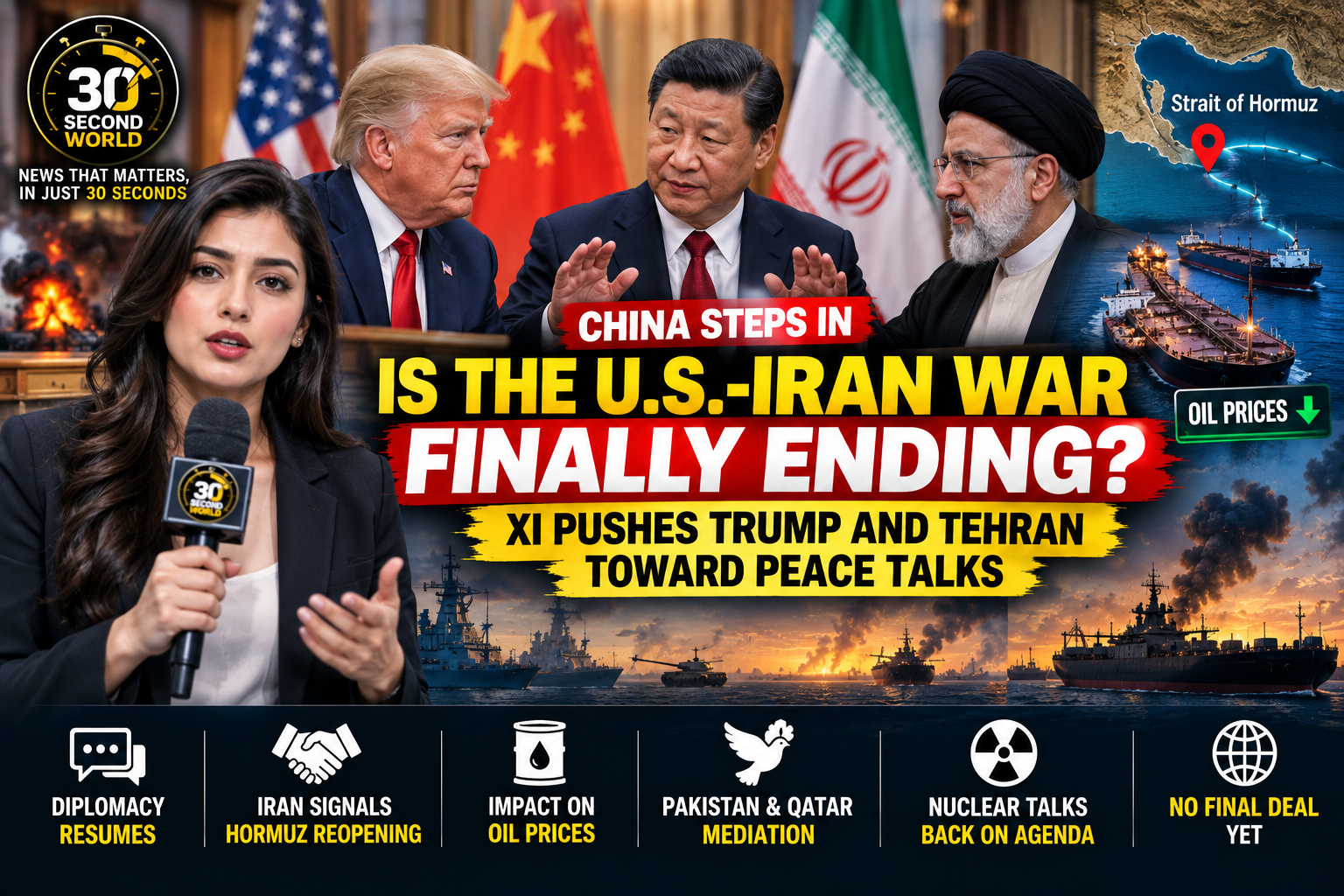
Fresh diplomatic activity has raised hopes that the U.S.-Iran war could move toward de-escalation, after Chinese President Xi Jinping urged Washington and Tehran to return to negotiations while Iran signaled it could reopen the Strait of Hormuz if the United States eases military pressure.
However, there is no final peace agreement yet. U.S. and Iranian officials were still described as being far apart on key issues after recent indirect talks, meaning the latest developments represent an opening for diplomacy rather than confirmation that the war is over.
Xi Jinping Raises Iran War With Trump
China moved more visibly into the diplomatic process during Xi Jinping’s September 24 meeting with U.S. President Donald Trump at the White House.

According to China’s official account, Xi urged the United States and Iran to return to resolving their differences through dialogue and negotiation and said Beijing supported both countries returning to the Islamabad Memorandum of Understanding.
Xi also said China wanted Washington and Tehran to eventually reach a broader agreement covering Iran’s nuclear program and other disputes.
Reuters reported that Trump and Xi discussed the Iran war during their Washington summit, although the meeting produced no publicly announced breakthrough on Iran.
Is China Now the Main Mediator?
Not exactly.
China is playing a more active diplomatic role and pressing both sides toward negotiations, but Pakistan and Qatar have been the formal mediators under the existing Islamabad MoU framework. Pakistan’s Foreign Ministry says both countries facilitated implementation talks involving U.S. and Iranian representatives following the June agreement.
So the more accurate description is:
China is increasing diplomatic pressure and support for peace talks, while Pakistan and Qatar remain central formal mediators in the established negotiation framework.
What Is the Islamabad Memorandum of Understanding?
The Islamabad Memorandum of Understanding was signed between the United States and Iran on June 17, 2026, following mediation involving Pakistan and Qatar.
The framework sought to stop military operations and create a negotiating process covering issues including:
- Iran’s nuclear program
- sanctions
- the Strait of Hormuz
- monitoring and dispute resolution
- regional military operations
Follow-up talks in Switzerland established working groups and a roadmap toward a more comprehensive agreement.
The agreement did not ultimately produce lasting peace, and hostilities later resumed, which is why Xi is now calling for Washington and Tehran to return to that framework.
Iran Signals It Could Reopen the Strait of Hormuz
One of the biggest developments came from Tehran.
A senior Iranian official told Reuters that Iran could reopen the Strait of Hormuz within seven days if the United States:
- reduces military pressure
- lifts its blockade on Iranian ports
Iran’s delegation at the United Nations General Assembly in New York was also given authority to pursue diplomatic negotiations with Washington.
Iran had already submitted a proposal through mediators on September 16 aimed at ending hostilities.
This is significant because the Strait of Hormuz is one of the world’s most important energy shipping routes.
Before the conflict, roughly a fifth of global oil and gas shipments moved through the waterway.
Why the Strait of Hormuz Matters
The war has disrupted energy markets and international shipping.
When access to the Strait of Hormuz becomes uncertain, markets worry about:
- crude oil supplies
- LNG shipments
- tanker costs
- fuel prices
- inflation
- global supply chains
Recent hopes for a diplomatic breakthrough have therefore had an immediate impact on oil-market sentiment.
At the same time, Reuters reported that oil prices remained close to elevated levels as investors weighed peace prospects against the risk of another military escalation.
A reopening of Hormuz could reduce pressure on global energy markets if shipping normalizes.
Trump Says Talks Are Continuing
Trump has also publicly acknowledged ongoing diplomacy.
On September 22, he said U.S.-Iran discussions were continuing and expressed confidence that a settlement could eventually be reached.
But his messaging has remained mixed.
During his United Nations speech, Trump also issued a severe warning to Tehran if negotiations fail, showing that Washington continues to combine diplomacy with military and economic pressure.
That makes the current situation highly uncertain.
U.S. and Iran Are Still Far Apart
Despite the positive diplomatic signals, the two sides have not resolved their biggest disagreements.
Reuters reported after talks on September 23 that a senior Iranian official said Washington and Tehran remained far apart over how to end the conflict.
Major unresolved issues include:
Iran’s Nuclear Program
Washington wants strong restrictions preventing Iran from developing nuclear weapons capability.
Iran insists on protecting what it considers its legitimate nuclear rights.
Sanctions
Tehran wants sanctions relief as part of any lasting agreement.
Strait of Hormuz
The U.S. wants secure and unrestricted international shipping, while Iran has linked reopening to reductions in military and economic pressure.
Military Operations
Both sides would need credible mechanisms preventing renewed attacks.
These gaps explain why officials are talking again without yet announcing peace.
China Has Been Calling for De-Escalation for Months
Xi’s White House intervention was not China’s first attempt to influence the conflict.
Chinese Foreign Minister Wang Yi told Iran earlier in September that both sides should exercise restraint, return to the interim peace framework and resume substantive negotiations.
China has major economic reasons to favor stability in the Gulf.
The region is crucial to global energy flows, including supplies used by Asian economies.
Beijing has therefore consistently called for de-escalation rather than a prolonged regional war.
Pakistan’s Role Remains Important
Pakistan has also played a major role in the negotiations.
In June, Islamabad helped facilitate the agreement that became known as the Islamabad MoU.
Pakistan and Qatar subsequently helped organize implementation discussions in Switzerland involving both the United States and Iran.
Earlier Reuters reporting also showed Pakistan exploring ways to restart stalled U.S.-Iran talks following a Chinese diplomatic push.
This means any new peace process may involve several powers rather than a single mediator.
Is the U.S.-Iran War Actually Ending?
Not yet.
There are clear reasons for optimism:
- U.S.-Iran contacts have resumed
- Iran has offered conditional reopening of Hormuz
- Xi is directly urging negotiations
- China is supporting the Islamabad framework
- Pakistan and Qatar already have an established mediation channel
- Trump says talks continue
But there are equally serious reasons for caution:
- no comprehensive peace deal has been signed
- military pressure continues
- sanctions remain unresolved
- nuclear disagreements remain
- both sides continue issuing threats
The safest conclusion at this stage is that the diplomatic path has reopened, but the war has not officially ended.
What Happens Next?
Several developments will determine whether the diplomatic momentum turns into an actual peace agreement.
1. U.S.-Iran Negotiations
More indirect or direct talks could take place through mediators.
2. Strait of Hormuz
Any verified reopening would be one of the clearest signs of de-escalation.
3. U.S. Military Pressure
Iran has specifically linked its Hormuz offer to reduced American military pressure.
4. Sanctions
Economic restrictions remain a major bargaining issue.
5. Nuclear Negotiations
A durable peace agreement will likely require some understanding over Iran’s nuclear program.
6. China, Pakistan and Qatar
These countries could continue pushing both sides toward a negotiated settlement.
Why This Story Matters Globally
An end to the conflict could affect far more than the Middle East.
It could influence:
- oil prices
- global inflation
- shipping costs
- stock markets
- airline fuel costs
- U.S.-China relations
- Gulf security
- Iran sanctions
- global supply chains
That is why every sign of progress in the negotiations is being watched closely by governments, businesses and financial markets.
30 SECOND WORLD Fact Check
Has the U.S.-Iran war officially ended?
❌ No.
Are the United States and Iran talking again?
✅ Yes, diplomatic contacts have resumed.
Has China stepped into the diplomatic process?
✅ Yes. Xi directly urged both sides to return to negotiations.
Is China the only mediator?
❌ No. Pakistan and Qatar remain central mediators under the Islamabad MoU framework.
Could Iran reopen the Strait of Hormuz?
✅ Iran says it could do so within seven days if the U.S. meets specified conditions.
Is there a final peace deal?
❌ Not yet.
The Bottom Line
The latest diplomatic moves represent one of the clearest openings for de-escalation in the U.S.-Iran conflict.
China’s Xi Jinping has now personally urged President Trump to return Washington and Tehran to the negotiating track established under the Islamabad Memorandum of Understanding.
Iran, meanwhile, says it is prepared to reopen the Strait of Hormuz if Washington reduces military pressure and lifts its blockade on Iranian ports.
But expectations should remain measured.
The United States and Iran remain divided over sanctions, the nuclear issue, Hormuz and the terms required to end military operations.
For now, the war is not officially over — but the diplomatic door is clearly open again.
30 SECOND WORLD — NEWS THAT MATTERS, IN JUST 30 SECONDS.
#USIranWar #IranWar #Iran #UnitedStates #China #XiJinping #DonaldTrump #Trump #PeaceTalks #IranPeaceDeal #StraitOfHormuz #OilPrices #MiddleEast #MiddleEastNews #IranNuclearDeal #Pakistan #Geopolitics #WorldNews #BreakingNews #LatestNews #30SecondWorld