
U.S. Import Ban on Canadian Alcohol, Dairy and Motorcycles Takes Effect as Canada-U.S. Trade Dispute Escalates
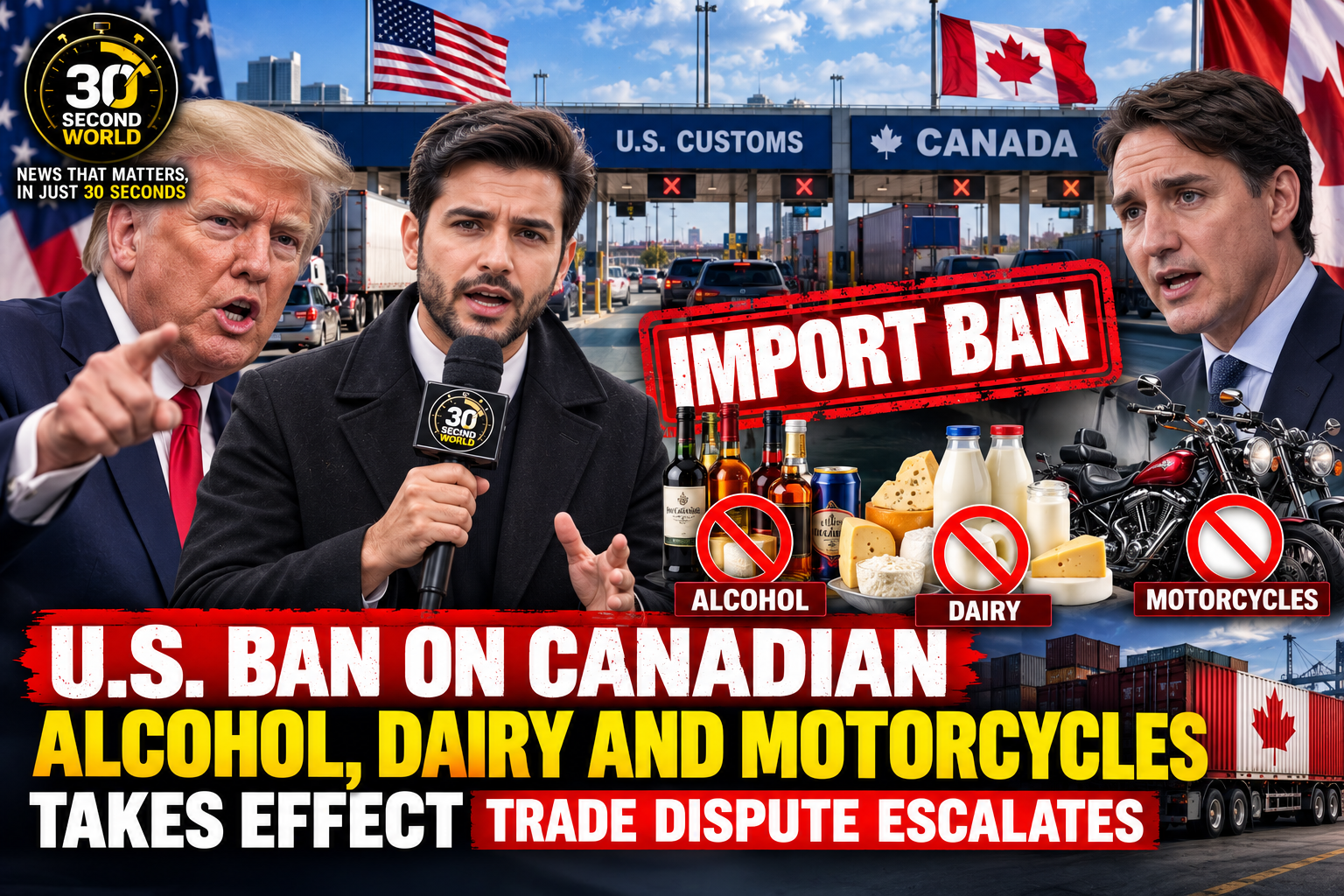
OTTAWA/WASHINGTON, Sept. 29, 2026 — The United States has begun blocking imports of selected Canadian alcoholic beverages, dairy products and motor-vehicle products, marking another major escalation in the ongoing Canada-U.S. trade dispute.
The restrictions took effect at 12:01 a.m. Eastern Time on September 29, under proclamations signed by U.S. President Donald Trump earlier this month. Products covered by the new measures had previously faced additional tariffs of as much as 50%, but selected goods are now being excluded from U.S. importation altogether. The White House
What Canadian Products Are Affected?
The U.S. measures target selected products in three major categories:

- Canadian alcoholic beverages
- Canadian dairy products, including certain cheese and related goods
- selected Canadian motor-vehicle products, with reporting highlighting Canadian-made motorcycles among affected items. The White House
The exact products covered are defined through tariff classifications contained in the White House proclamations.
Goods that arrived in the United States before the September 29 deadline but had not yet cleared for consumption remain subject to the earlier 50% tariff rather than the new import ban. The White House
Why Did the U.S. Impose the Ban?
The Trump administration says Canada continues to discriminate against American commerce.
For dairy, the White House argues that Canada’s tariff-rate quota arrangements disadvantage certain U.S. cheese exports.
For alcohol, Washington says Canadian restrictions on American alcoholic beverages treat U.S. products differently from those of other countries.
And in the automotive sector, the administration says Canada’s tariff system places U.S. vehicles and parts at a disadvantage. These are the U.S. government’s stated justifications for the measures. The White House
The administration is relying on Section 338 of the Tariff Act of 1930, which allows the president to respond to trade practices the U.S. government determines discriminate against American commerce. The White House
Trump Calls Canada “Entitled”
Hours before the restrictions were due to begin, Trump criticized Canada’s position while speaking to reporters.
He described Canada as “entitled” and argued that the United States had been treated unfairly in the bilateral trading relationship. Global News
The comments came as businesses on both sides of the border waited to see whether last-minute negotiations could prevent the restrictions.
No such agreement had been announced before the ban’s effective date.
Canada Has Already Hit Back With Counter-Tariffs
Canada has responded to earlier U.S. measures with its own tariffs.
The Canadian government says it imposed counter-tariffs on C$27.6 billion worth of U.S. imports beginning September 8, with rates of 15%, 25% and 50% depending on the product. Canada
The targeted sectors include:
- steel and aluminum
- dairy
- appliances
- agricultural equipment
- pulp and paper
- plastics
- electronics
Ottawa says the measures match U.S. tariffs “dollar for dollar” and argues that concessions sought by Washington were neither fair nor economically sound. Canada
Canadian Businesses Brace for Disruption
Canadian exporters are now facing a more serious problem than higher tariffs.
A tariff makes a product more expensive.
An import ban can prevent the covered product from entering the U.S. market at all.
That difference could be especially significant for Canadian producers that rely heavily on American customers.
Global News reported that some businesses rushed shipments across the border before the midnight deadline, with industry representatives warning that the restrictions could force major changes to manufacturing and distribution plans. Global News
Alcohol Industry Faces Immediate Pressure
Canadian distilleries, wineries and other beverage producers could be among the most immediately exposed sectors.
The White House says certain Canadian alcoholic beverages previously subject to its 50% tariff are now excluded from U.S. importation. The White House
For exporters with significant U.S. sales, that could mean searching for alternative markets or restructuring supply chains.
Dairy Becomes Another Major Flashpoint
Dairy has long been one of the most sensitive areas of Canada-U.S. trade relations.
Washington objects to Canada’s tariff-rate quota system, particularly how access is allocated for some U.S. cheese products.
Canada maintains a supply-management system designed to manage domestic production and imports.
The U.S. administration says Canada’s current arrangements discriminate against American exporters; Canada has resisted those demands and maintains that Washington’s requested concessions would undermine Canadian economic interests. The White House
Motorcycles and Vehicle Products Also Hit
The White House has separately barred selected Canadian motor-vehicle products from entry.
Recent Canadian reporting has highlighted Canadian-made motorcycles among products affected by the new measures. The White House
This adds another source of tension to a deeply integrated North American automotive supply chain.
What Does This Mean for Consumers?
The immediate impact may differ between the two countries.
In the United States, reduced access to some Canadian products could:
- reduce consumer choice
- force importers to find alternative suppliers
- affect prices in certain categories
In Canada, continued retaliation and trade uncertainty could:
- increase costs for some U.S. imports
- pressure exporters
- reduce business investment
- encourage companies to find markets outside the United States
The final impact will depend on how long the restrictions remain in place and whether negotiations resume.
Could the Ban Be Reversed?
Yes.
The proclamations could be changed, suspended or revoked if the two governments reach a new agreement.
But as the September 29 deadline arrived, there was no confirmed comprehensive deal preventing the measures from taking effect.
The restrictions therefore represent the latest stage in a trade confrontation that has moved from negotiations, to tariffs, to counter-tariffs — and now to outright import bans.
The Bottom Line
The U.S. import ban on selected Canadian alcohol, dairy and motor-vehicle products is now taking effect, significantly escalating the Canada-U.S. trade dispute.
Washington says Canada continues to discriminate against American exporters, while Ottawa says the concessions demanded by the United States were unfair and economically damaging. The White House
Canada has already responded with tariffs covering C$27.6 billion in U.S. imports, while Canadian companies affected by the U.S. bans now face uncertainty over access to their largest neighboring market. Canada
Whether the dispute escalates further or returns to negotiations will now be one of the most closely watched economic stories in Canada.
30 SECOND WORLD — NEWS THAT MATTERS, IN JUST 30 SECONDS.
#Canada #UnitedStates #CanadaUSTrade #Trump #DonaldTrump #Tariffs #ImportBan #CanadianEconomy #CanadaNews #TradeWar #CanadianExports #Dairy #Motorcycles #BusinessNews #Economy #BreakingNews #WorldNews #30SecondWorld